After a breakdown or collision, the first task is to prevent another collision. Administrative details and photographs can wait until everyone is out of immediate danger.
Protect people before paperwork
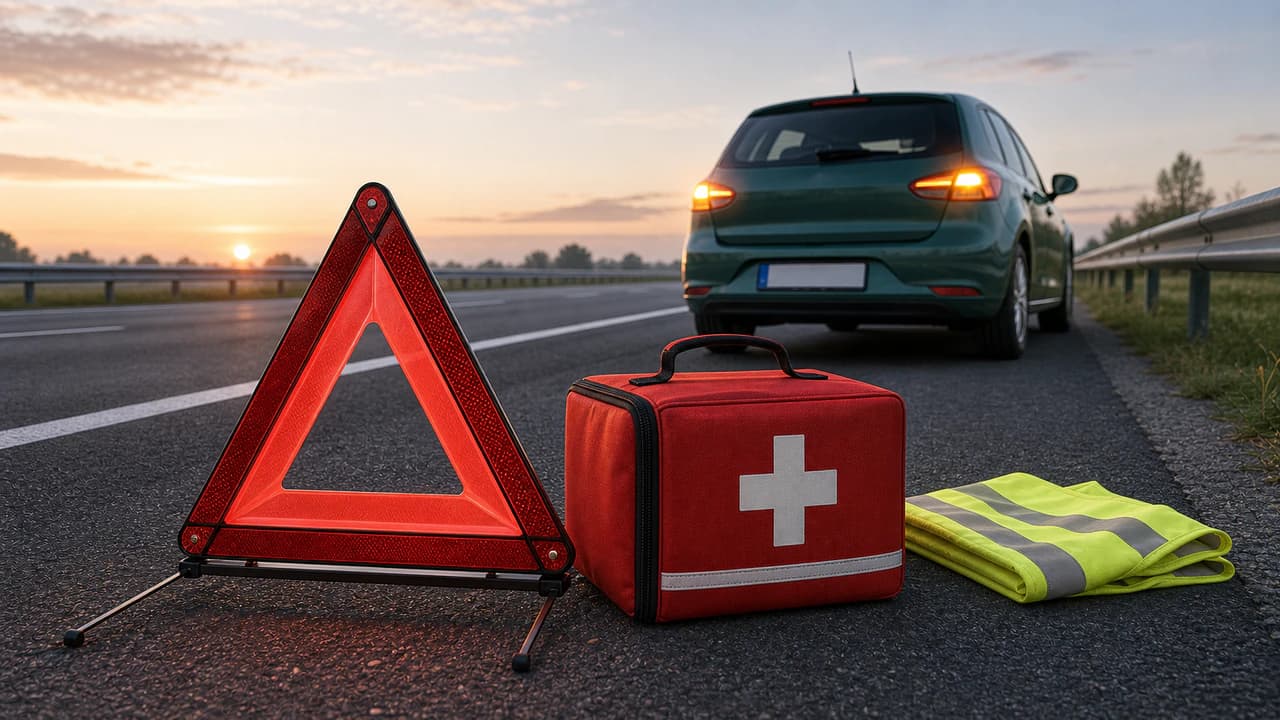
For a breakdown or damage-only collision, move the vehicle out of traffic if that is safe. If someone is injured, contact emergency services before moving vehicles unless immediate danger requires action. Use hazard lights to warn approaching drivers. On a motorway, avoid standing beside the car on the traffic side. Put on a reflective vest before leaving when you can do so safely, and move behind the barrier if there is a safe accessible place.
Do not cross live lanes to retrieve belongings. If leaving the vehicle would expose you to greater danger, contact emergency services and follow their instructions.
Warn without creating another danger
Learn where the vest and warning triangle are kept before a journey. Belgian rules normally require the triangle at least 30 metres behind an immobilised vehicle, or 100 metres on a motorway; built-up-area provisions can differ. Never walk into moving traffic simply to achieve a distance. Explain an unsafe position to the emergency operator.
Warning equipment does not make the roadside a safe place to wait. Keep passengers away from traffic and from the area where another vehicle could strike yours.
Call the right service
For urgent medical help or fire, call 112; urgent police assistance in Belgium is reached directly on 101. Give the road, direction, nearby exit or kilometre marker, what happened and whether people are injured or in danger. Answer the operator’s questions and remain connected until told to end the call.
For an ordinary breakdown without immediate danger, contact your breakdown provider or insurer. Emergency numbers are not a booking service for routine towing.
Deal with details once safe
Exchange the information needed for an accident report without standing in a live lane. Record facts rather than guessing responsibility. If someone is injured, prioritise professional help and follow the operator’s instructions instead of improvising treatment.
Practise saying your location clearly. “On the motorway” is much less useful than a road number, direction and identifiable nearby marker.
Official sources
Rules and procedures checked on 21 September 2026. Follow the linked authority for later changes; rules announced for a future date are not yet in force.