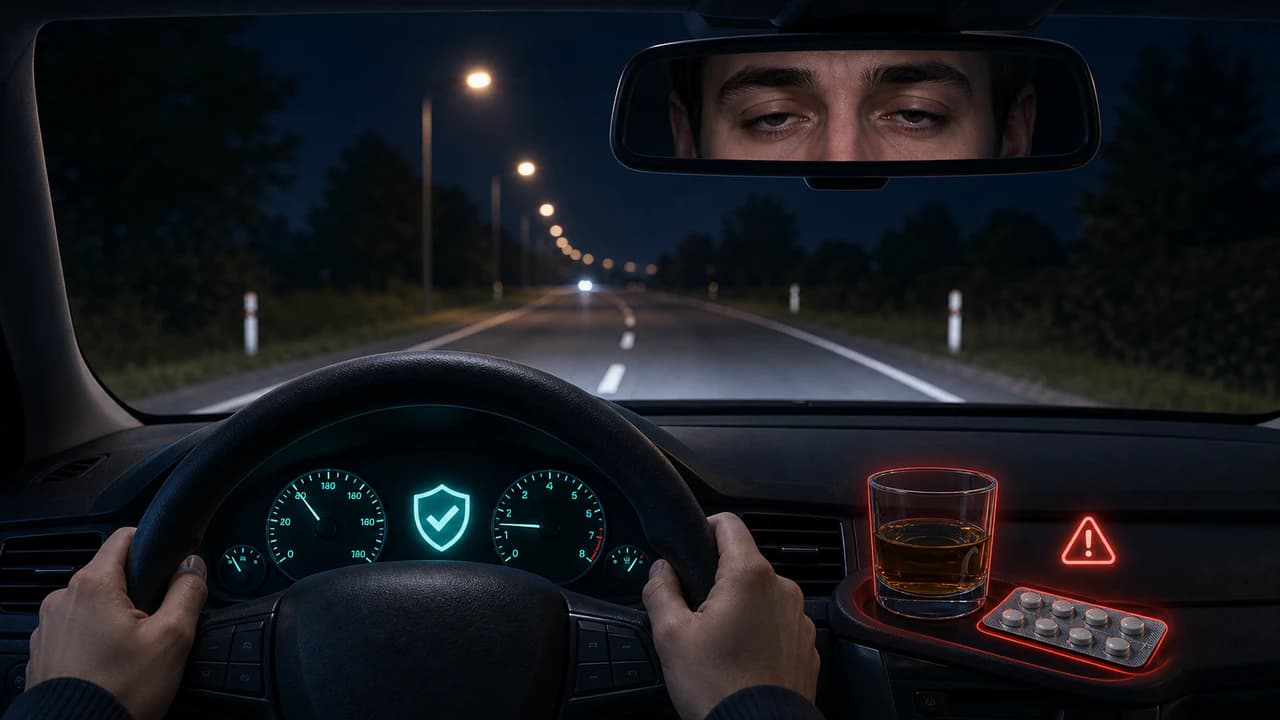
The safest plan is to decide how you will get home before you drink. A legal threshold is an enforcement boundary, not a target to approach or proof that you are fit to drive.
Know what the units mean
For ordinary drivers, Belgian alcohol sanctions start at 0.5 grams per litre of blood or 0.22 milligrams per litre of exhaled alveolar air. These are different measurements; do not exchange the numbers. A lower threshold applies to certain professional drivers, so check the rules for the driving activity rather than assuming one limit fits everyone.
Do not convert this into a supposedly safe number of drinks. Serving sizes and individual responses differ. Feeling alert, eating, or drinking coffee is not a reliable test of whether you can legally and safely drive.
Make a transport plan that survives a change of plans
Choose a non-drinking driver, public transport or a taxi before the evening starts. If the chosen driver drinks, change the transport plan rather than negotiating how short the drive will be. “Only a few streets” still exposes other people to the risk.
For a practice question, identify the decision before considering the distance: if you are impaired, shortening the route does not solve the problem.
Check medicines as well as alcohol
Prescription status does not establish fitness to drive. Read the medicine’s leaflet and ask a pharmacist or doctor about driving, especially after starting treatment or changing a dose. Do not independently stop prescribed treatment to make a journey; arrange different transport while obtaining advice.
If you feel drowsy, dizzy or unable to concentrate, do not start driving. The same caution applies to recreational drugs and combinations of substances.
Learn the safety reasoning
When revising, separate a numeric legal question from a fitness-to-drive question. An answer can require recognising impaired judgement even when no measurement is given. Practise explaining why a transport alternative removes the risk instead of memorising a drink-count rule that cannot reliably predict it.
Official sources
Rules and procedures checked on 21 September 2026. Follow the linked authority for later changes; rules announced for a future date are not yet in force.