There is no universal following gap
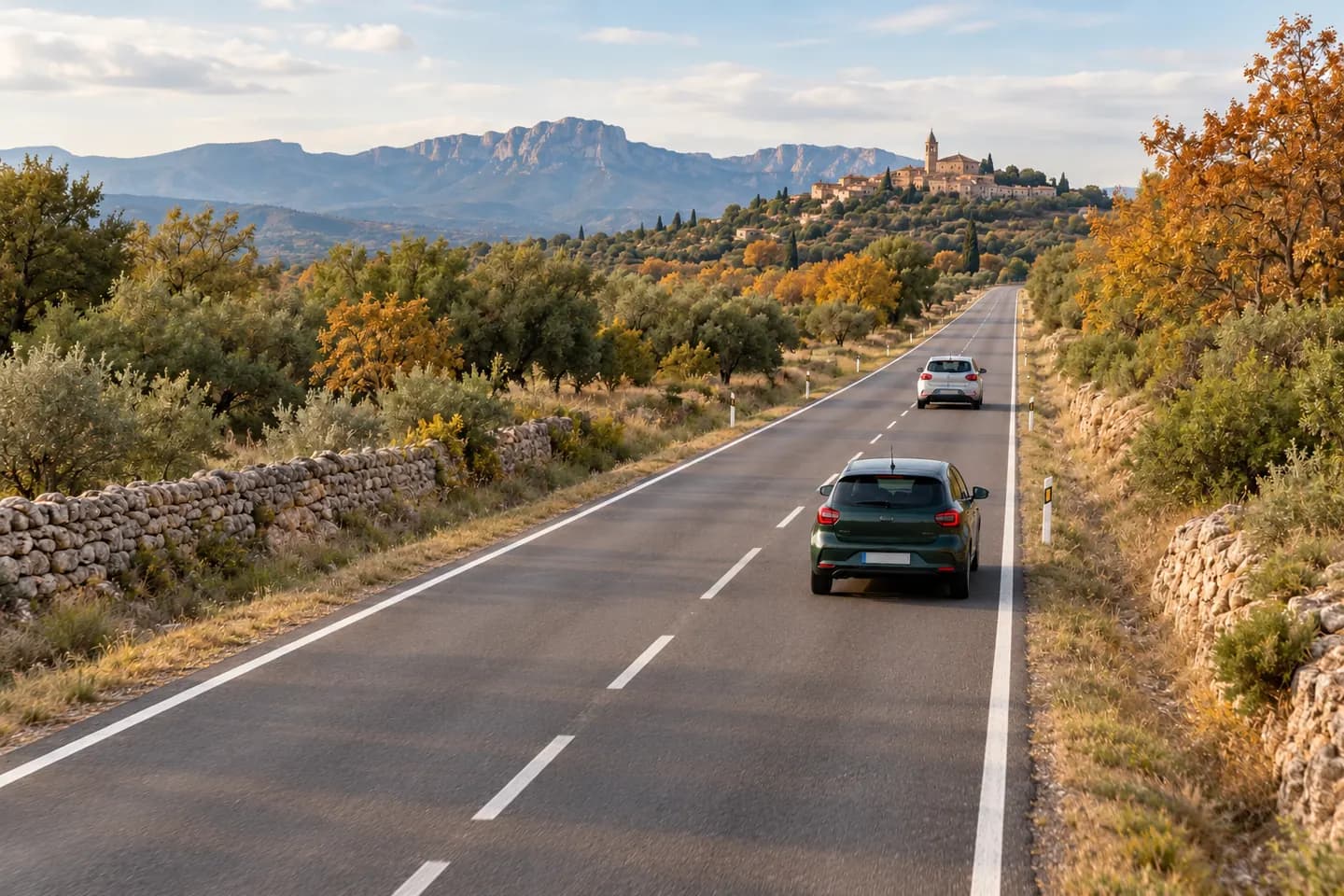
In Spain, leave enough room to stop without hitting the vehicle ahead if it brakes suddenly. Article 54 requires you to consider speed, grip and braking conditions. A single memorised distance cannot cover every situation involving a passenger car.
Separate the question into two decisions: how much space the car needs to stop and whether the location imposes a specific separation. A tunnel adds a requirement that should not be confused with the general rule.
Reaction plus braking equals stopping distance
Reaction distance is travelled between noticing the danger and beginning to brake. Braking distance is travelled from applying the brakes until the car stops. Stopping distance is their sum.
For a calculation example, 90 km/h equals 25 metres per second. If reaction takes one second, the car travels about 25 metres before braking even starts. It still needs braking distance afterwards. The assumed second illustrates the calculation; it is not a guaranteed reaction time for every driver.
Draw two consecutive sections on paper. Label what happens in each one. This makes it easier to see why good brakes do not remove the need for a following gap.
Change the conditions, change the margin
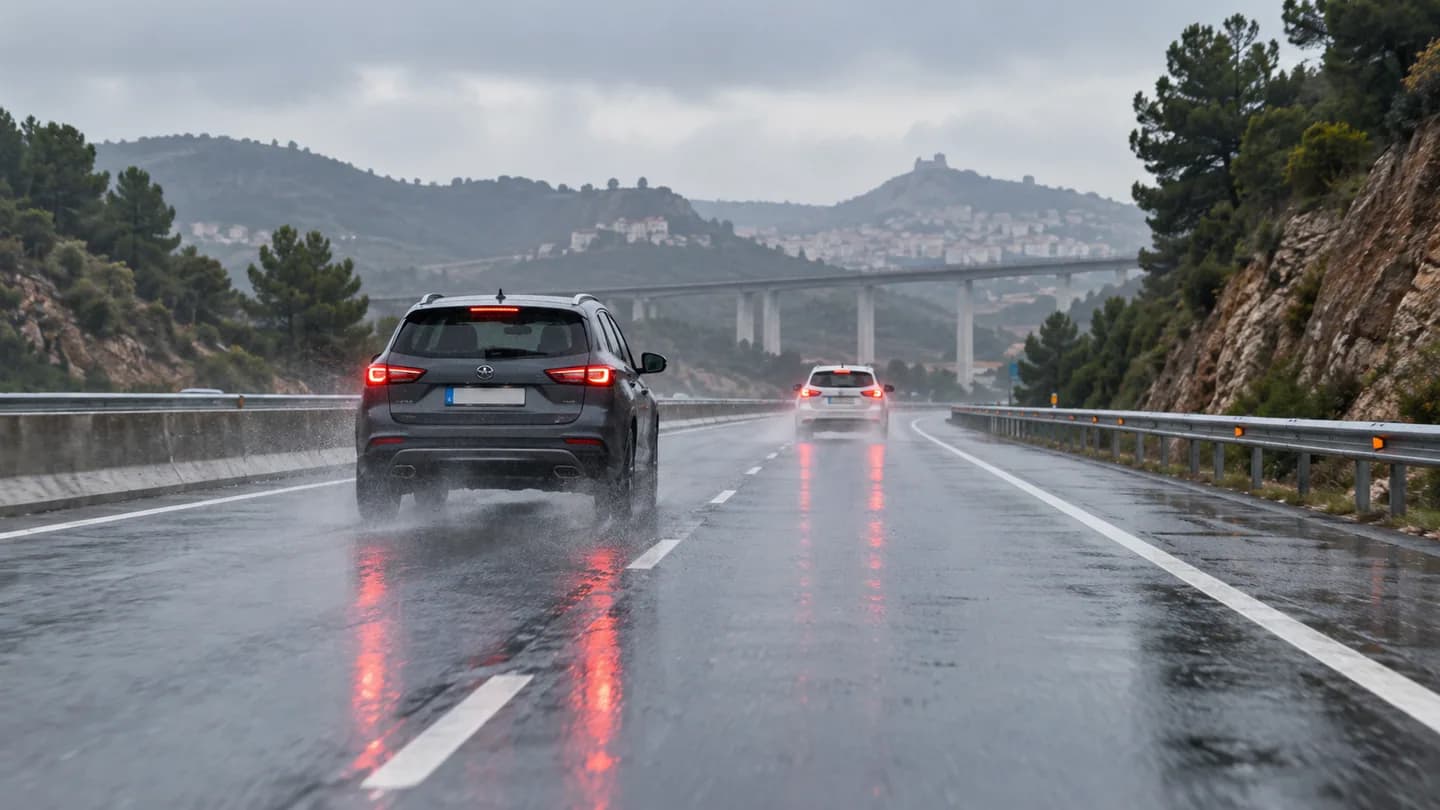
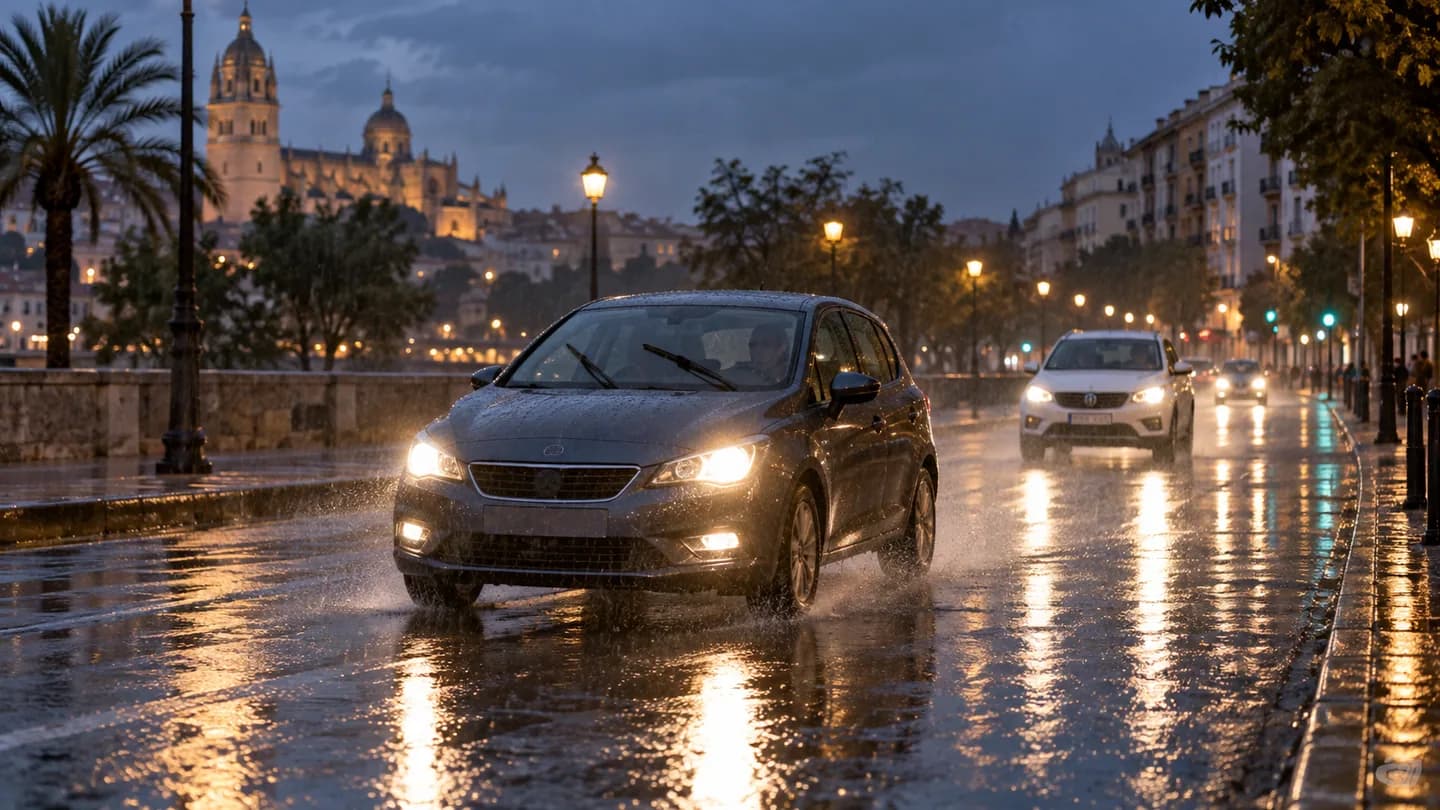
Rain can reduce grip and lengthen braking. Fatigue and distraction can delay the response. In a wet-road picture, do not automatically choose the gap that looked adequate in a dry-road example.
If another driver moves into the space ahead, rebuild a safe margin smoothly. Treat the gap as room to respond rather than a position to defend by accelerating.
The tunnel requirement
When not overtaking in a tunnel or underpass, Article 95 requires at least 100 metres or a four-second interval behind the preceding vehicle. For vehicles over 3,500 kg, the corresponding requirement is 150 metres or six seconds. These specific figures are not a universal minimum for every ordinary road.
Check your reasoning before choosing
Ask which distance the question describes, whether braking has actually started and whether a special location changes the rule. Then consider speed and conditions. A rule of thumb in seconds cannot replace a location-specific legal requirement.
Try the free Spanish theory test to practise reading situations carefully. Mazlet provides original learning questions, not official DGT exam questions or a guarantee of exam readiness.
Official sources
Sources checked: October 13, 2026.