Start with the reason for stopping
A red light, a passenger drop-off and a shopping trip can all leave a car motionless. Spanish theory questions distinguish them by why you stop, how long you stay and whether you leave the vehicle.
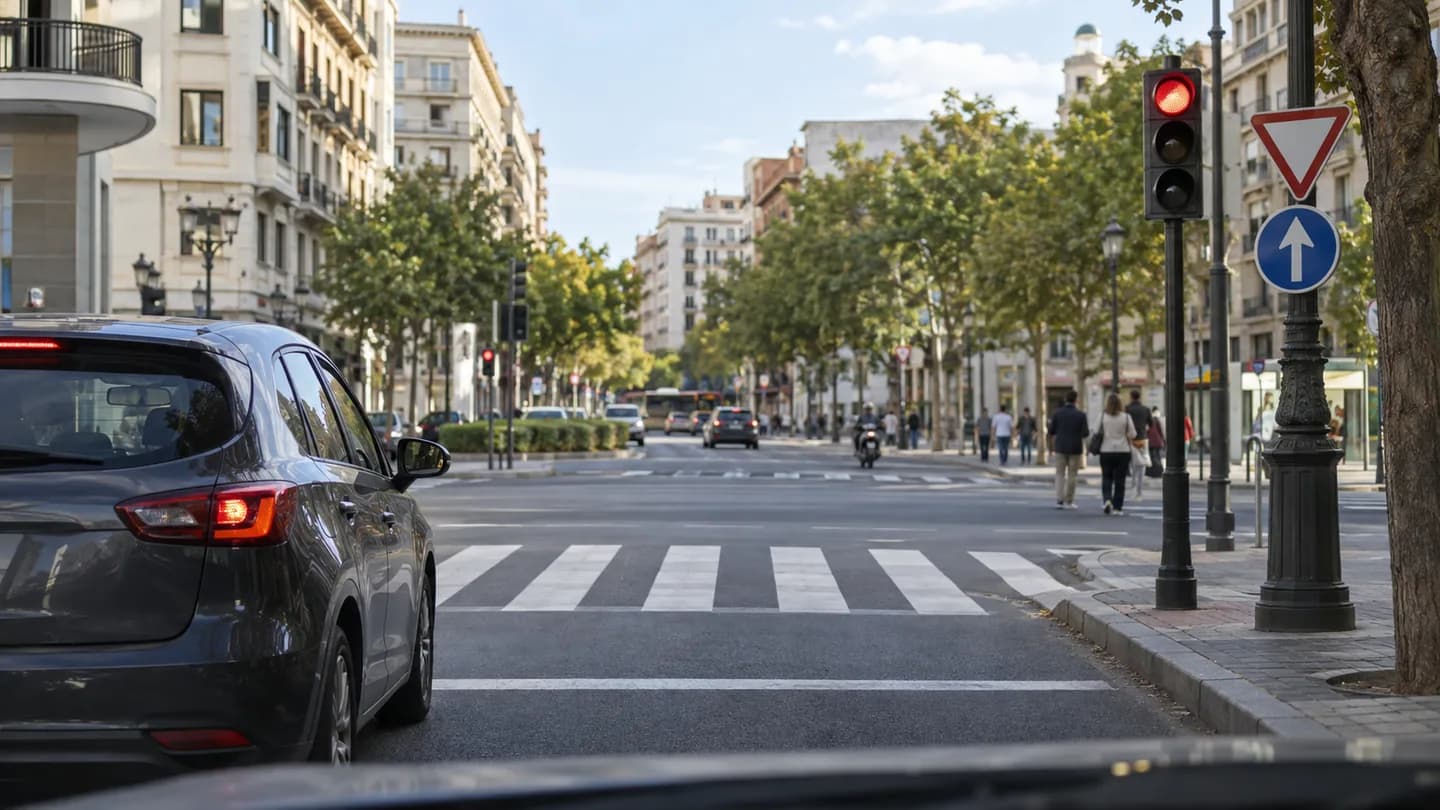
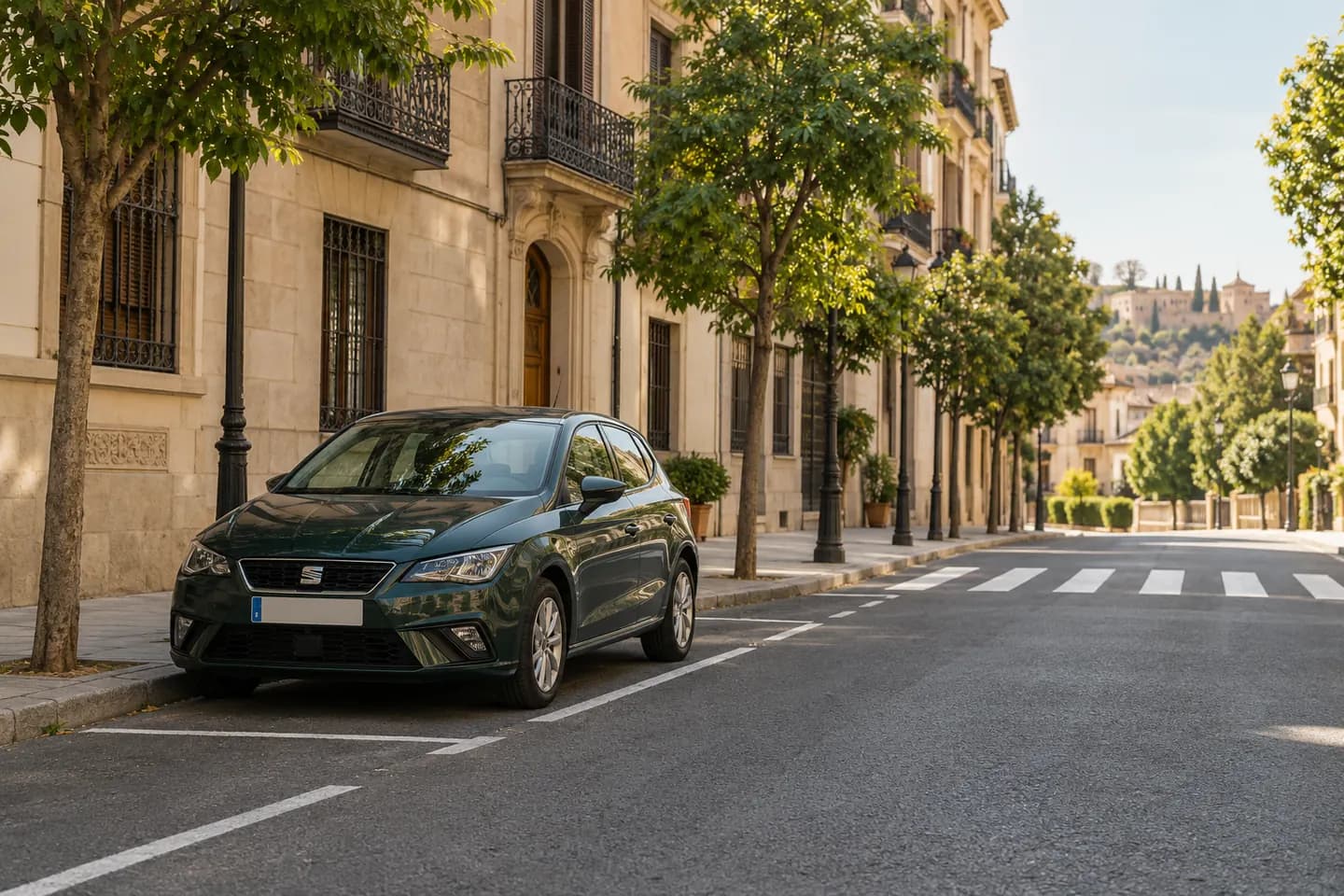
Detención is a stop required by an emergency, traffic conditions or a rule. Parada is a voluntary stop lasting less than two minutes without the driver leaving the vehicle. Estacionamiento covers immobilisation that is neither of those. These are legal categories, not interchangeable English translations.
Work through three ordinary situations
Waiting at a red light is detención: you are complying with the light. Dropping off a passenger for one minute while staying in the vehicle is parada, provided stopping there is allowed. Leaving the vehicle to enter a shop is estacionamiento; a quick purchase does not make it a parada.
Read the cause first. Only then check the duration and what the driver does. Counting minutes without considering the reason can lead to the wrong answer.
A brief stop still needs a permitted location
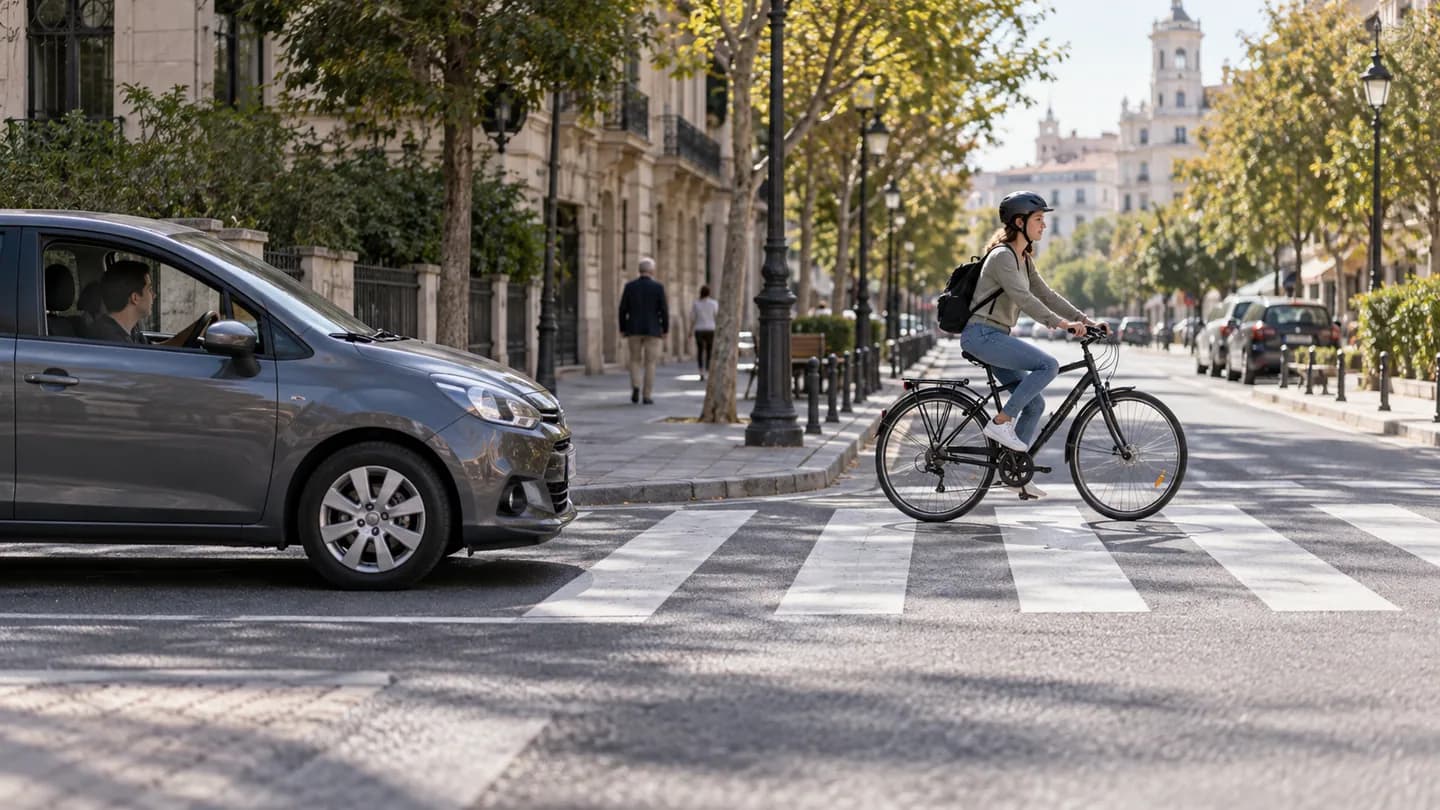
Article 94 of Spain’s circulation regulation prohibits stopping on pedestrian and cycle crossings, in reserved lanes and where a vehicle hides a sign, among other places. Hazard lights do not give permission to stop.
Picture a passenger asking to get out beside a crossing. Ask whether the car would occupy the crossing or obstruct the view of someone approaching it. Find a permitted position that leaves people and their sightlines clear.
Read the complete restriction
A no-parking sign differs from a no-stopping-or-parking sign. Supplementary panels, arrows and times help define the restriction. Do not infer permission from an empty street.
Double parking is prohibited. A temporary stop in a second row is not automatically acceptable either: it must not create danger, obstruct traffic or breach another restriction. Municipal rules also matter for urban parking zones.
Turn each picture into a decision
Describe the action, identify the restriction and explain whom the vehicle could obstruct. Then change one detail: the driver leaves, the stay exceeds two minutes or the car occupies a crossing. Decide again rather than remembering a sentence from a previous question.
Try the free Spanish driving theory test afterwards. Mazlet uses original learning questions, not official DGT exam questions. Use the explanations to practise applying the rule to a new situation.
Official sources
Sources checked: October 13, 2026.