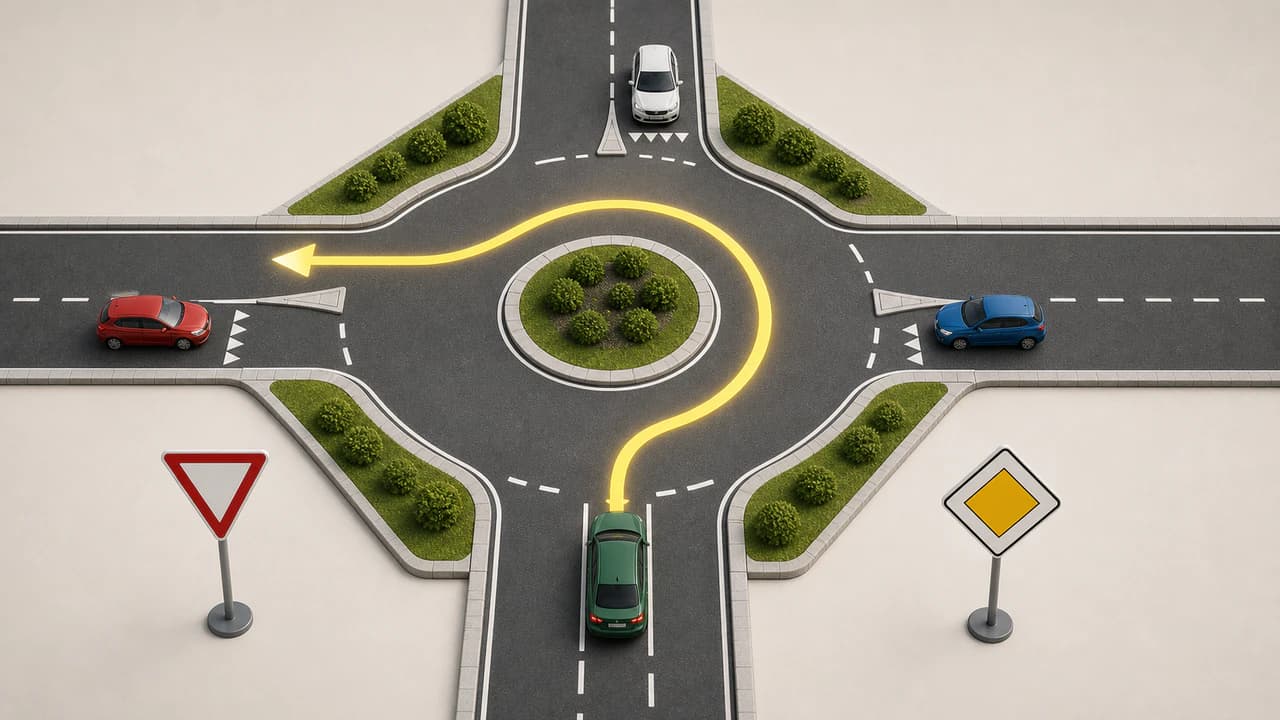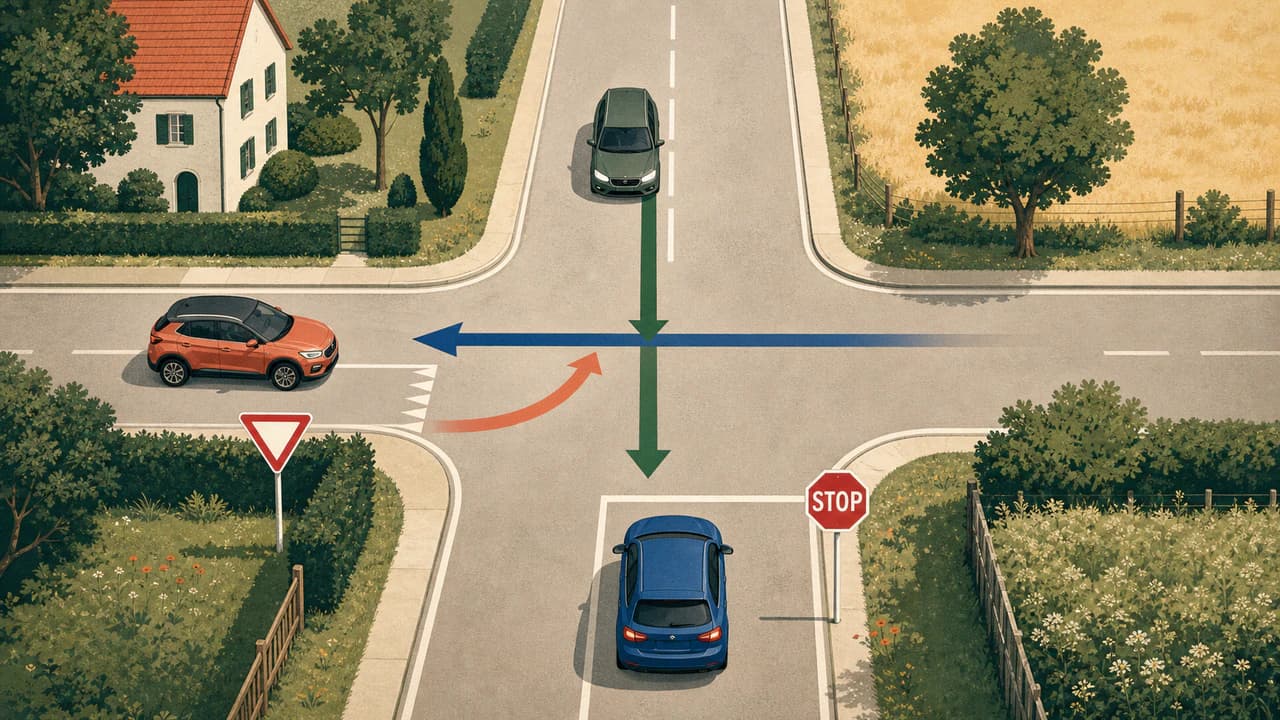
Busy Belgian streets often combine tram tracks, cycle facilities and pedestrian crossings within a few metres. Solve each potential conflict separately: a green light or a clear lane does not mean every movement is safe.
Distinguish the crossings
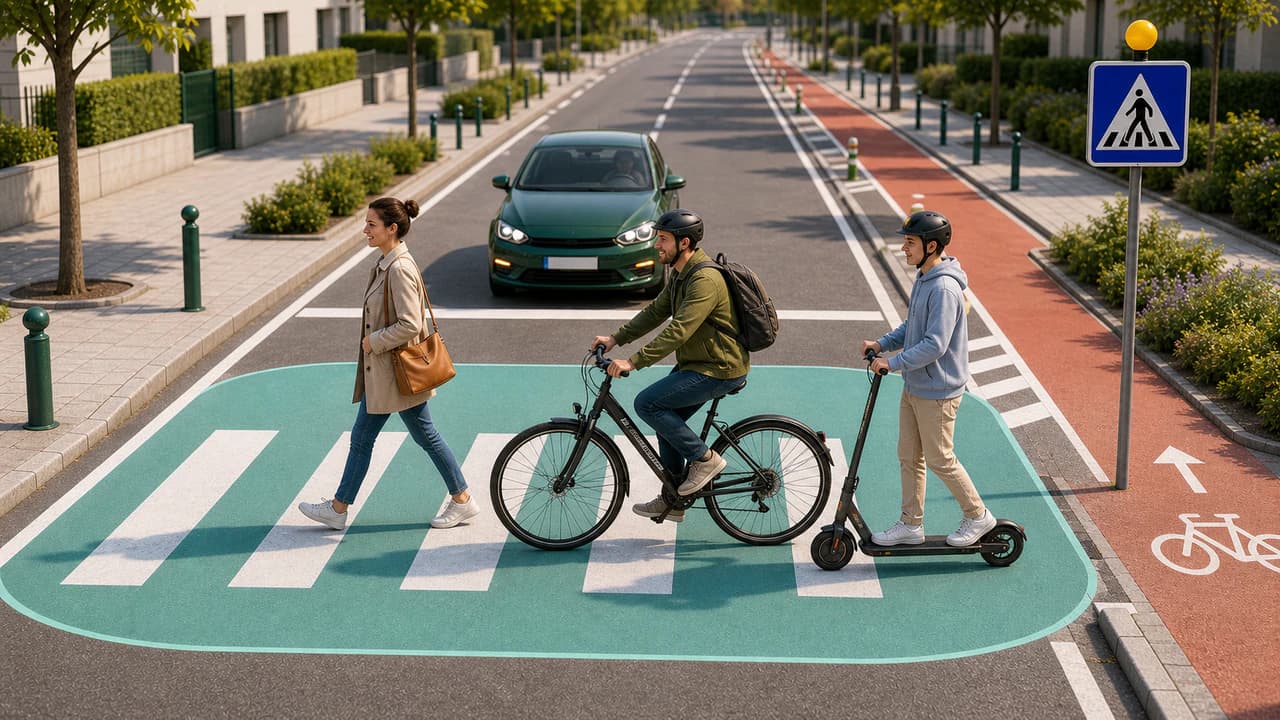
At an uncontrolled pedestrian crossing, drivers must yield to pedestrians already crossing or about to cross. A marked cycle crossing is not automatically governed by the same rule for a cyclist waiting to enter. Do not confuse that crossing with a continuing cycle track or a cyclist’s separate priority at a junction.
Look at markings, signals and the direction of travel. A person walking a bicycle and a person riding it do not necessarily have the same status.
Watch the path of your turn
Before turning, check who may continue alongside or across your new path. Mirrors alone can miss a cyclist in the blind spot. Reduce speed and make a final direct observation before committing to the turn.
In practice questions, trace your vehicle’s intended path and then trace the cyclist’s or pedestrian’s path. The point where they meet is the conflict you need to resolve.
Treat tram stops as changing situations
Rail vehicles have a special place in the priority rules; do not apply priority-to-the-right mechanically to a tram. Signals and authorised instructions still matter. Leave space for the tram’s path and anticipate people boarding or alighting, particularly where there is no protective island.
A stopped tram is not simply an obstacle to drive around quickly. First identify where passengers will walk and whether you must stop to let them pass.
Practise observation before answering
Try describing a scene in this order: controls, crossings, tracks, hidden areas, moving people. Then decide what you may do. If a parked van blocks the view of a crossing, missing information is itself a reason to slow and prepare to stop.
The aim is not to predict that everyone will behave perfectly. It is to make room for the people whose mistakes or sudden movements leave them least protected.
Official sources
Rules and procedures checked on 21 September 2026. Follow the linked authority for later changes; rules announced for a future date are not yet in force.