Belgium does not have one number for every road type. The applicable maximum depends on the sign, the region, the type of road, the vehicle and the conditions.
This overview was checked in July 2026. A posted limit controls the road, and local or temporary limits can be lower. Verify current official tables before driving or sitting an exam.
Use this order
- Read the posted speed-limit or zone sign.
- Identify whether you are in Brussels, Flanders or Wallonia.
- Identify the road: residential area, built-up area, ordinary road, divided road or motorway.
- Check vehicle-specific limits and temporary conditions.
- Choose a safe speed below the maximum when visibility, weather or traffic require it.
The numbers learners meet most
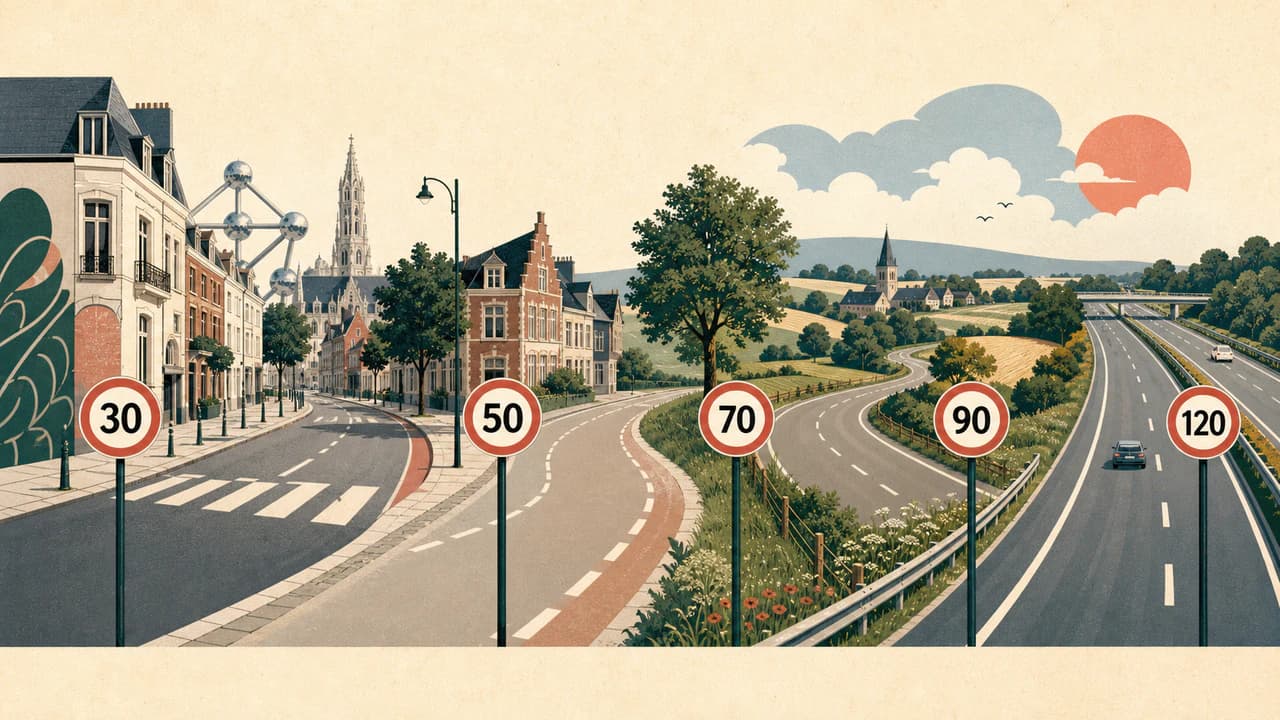
The current road-code overview shows 30 km/h as the general built-up-area limit in the Brussels-Capital Region. Elsewhere, signs and regional rules determine the built-up limit; never transfer a Brussels assumption to Flanders or Wallonia.
For an ordinary passenger car outside built-up areas, 70 and 90 km/h are common exam values depending on the region and road configuration. Roads with at least two lanes in each direction and physical separation may permit a higher general limit. 120 km/h is the familiar maximum on Belgian motorways for qualifying light vehicles, unless signs impose less.
Residential areas, school environments, pedestrian areas, cycle streets and work zones have their own lower or specially indicated regimes. The entry sign matters because a zone restriction normally continues until its end sign.
Why a sign is not a target
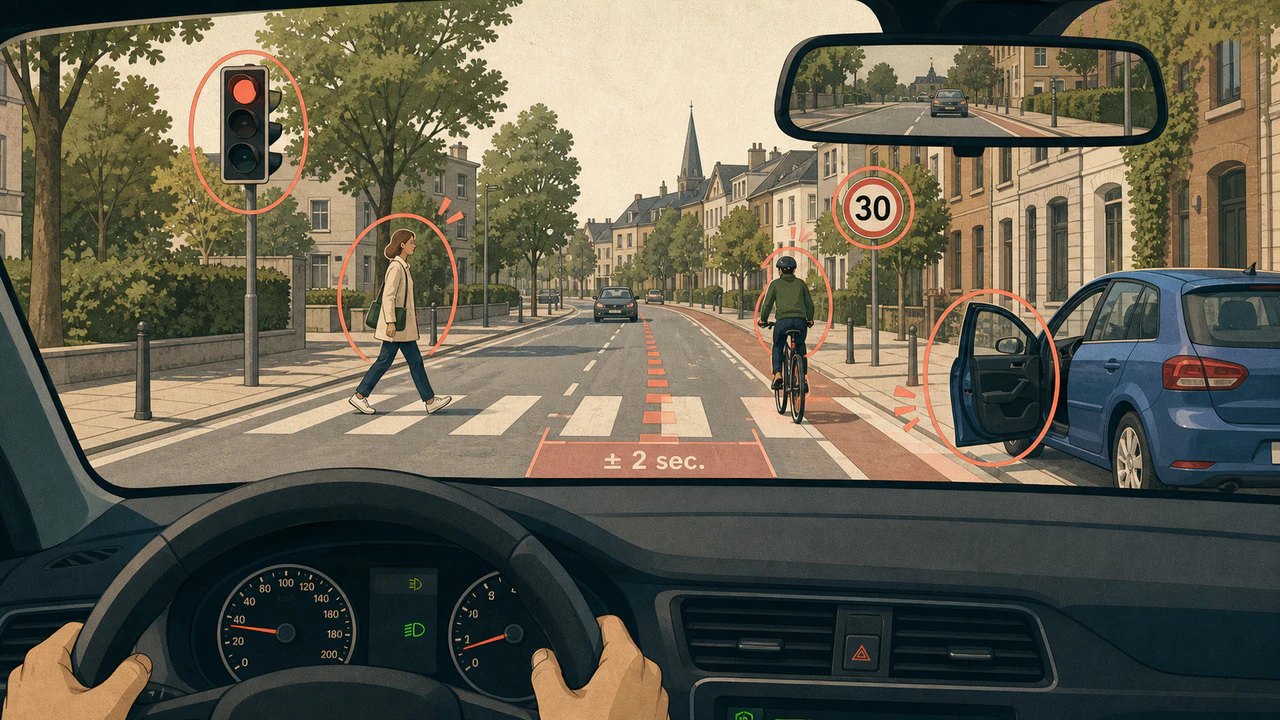
A limit is the highest permitted speed under favourable conditions. Fog, rain, darkness, congestion, a narrow street or children near the road can require much less. You must always be able to stop for a foreseeable obstacle within the visible distance.
Sign questions that cause mistakes
- Missing a zone entry sign and looking only for repeated round signs.
- Assuming a side road automatically ends a zone limit.
- Reading the number correctly but applying it before the sign.
- Forgetting that a temporary work-zone sign replaces the ordinary expectation.
- Confusing a recommended speed with a binding maximum.
- Applying passenger-car limits to a trailer or heavier vehicle.
A memory map
Think place before number. Ask: region, inside or outside the built-up area, road construction, then signs. Build flashcards around situations rather than isolated numbers: “Brussels built-up street”, “Flemish ordinary road outside town”, “Walloon road outside town”, “physically divided dual carriageway”, “motorway”.
Exam strategy
When a question includes several numbers, locate the sign and regional clue first. Do not calculate from what nearby cars appear to be doing. If the scene gives poor visibility, distinguish the legal maximum from the speed that is safe at that moment.
Speed errors can carry heavier consequences in Belgian theory scoring, including five-point deductions in Flanders for questions about the authorised maximum speed. This is a strong reason to practise region-aware scenarios rather than memorising one national table.
Use the current official speed-limit table on Wegcode and your regional exam authority as the final reference.
Official source
Check current figures in the Belgian road-code speed-limit table.